Let’s Review the Evidence
Detroit scored first when Kevin McGonigle homered in the opening inning. The Angels answered in the second, moved ahead in the fifth and added the run that eventually mattered in the sixth.
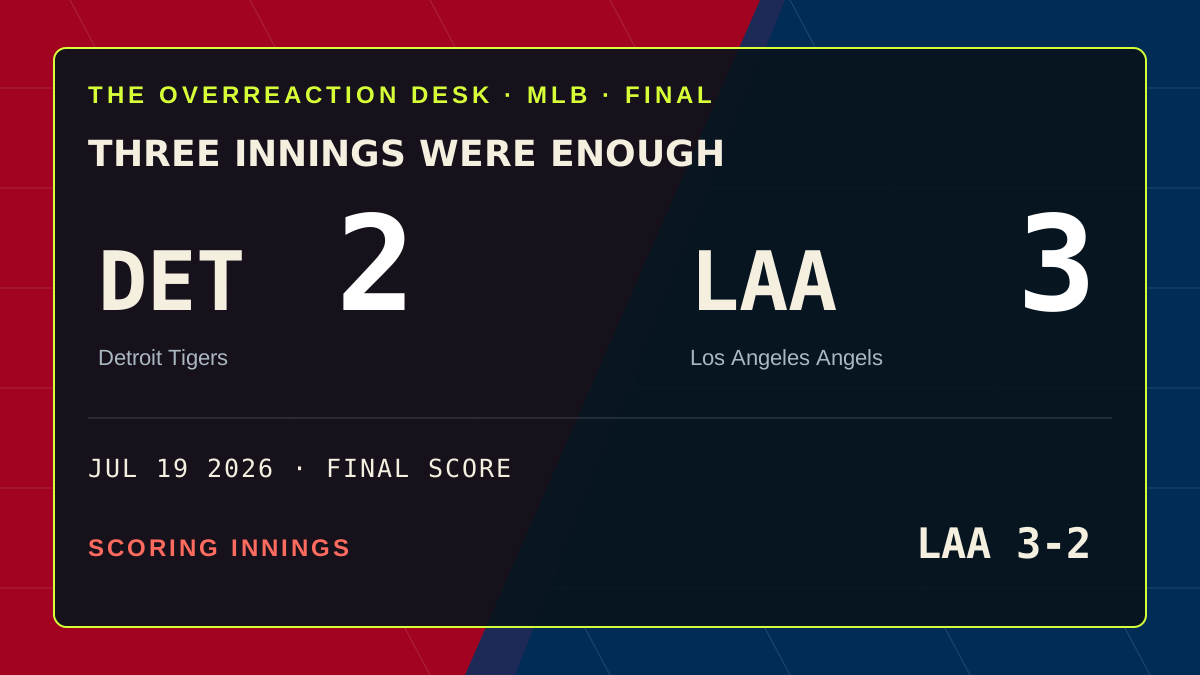
That sequence produced a 3-2 win without one large rally. Los Angeles scored once in three different innings and allowed Detroit only four hits. The Angels did not create an offensive spectacle. They assembled a lead one useful plate appearance at a time and asked the pitching staff to keep it intact.
For a team whose late leads tend to arrive with an alarm system, the final inning provided the required stress test.
Where the Wheels Came Off
Oswald Peraza tied the game with a second-inning single that brought Vaughn Grissom home. Jorge Soler’s fifth-inning groundout scored Zach Neto, and Neto singled home Peraza in the sixth.
Those were the Angels’ three scoring innings and three different run producers. Detroit starter Casey Mize allowed one run over 3 1/3 innings. Drew Anderson took the loss after allowing the go-ahead run and walking three in 1 1/3 innings.
The Angels had nine hits, including two from Peraza. They left room for Detroit to respond, but they kept creating just enough pressure to move the scoreboard before the Tigers could build an inning of their own.
Who Actually Showed Up
Ryan Johnson allowed two hits and three walks over five innings, striking out five. McGonigle’s homer was the only run against him.
Four Angels relievers handled the final four innings. Detroit did not score again until Riley Greene homered in the ninth, cutting the margin to one. Ryan Zeferjahn recovered to finish the game and earn the save.
The Tigers’ two runs came on solo homers at opposite ends of the afternoon. The power was real. The connective offense between those swings was missing.
What We Are Pretending This Means
Los Angeles can call this a clean version of a close win. The starter controlled five innings, the lineup distributed its runs and the bullpen protected a lead even after the ninth-inning margin shrank.
Detroit can point to two young hitters leaving the yard. It still lost because four hits cannot support much else. A solo homer starts an argument; without runners or follow-up contact, it rarely wins one.
The Desk Has Ruled
The verified Scoring Innings comparison was Angels three, Tigers two. Los Angeles scored in the second, fifth and sixth; Detroit scored in the first and ninth.
Desk ruling: The Angels did not need a big inning because they kept finding one run before Detroit found its next one. Johnson made the modest offense viable, and the bullpen survived Greene’s late objection. It was orderly, restrained and almost suspiciously free of Orange County chaos.