Angel City Made Pressure Count
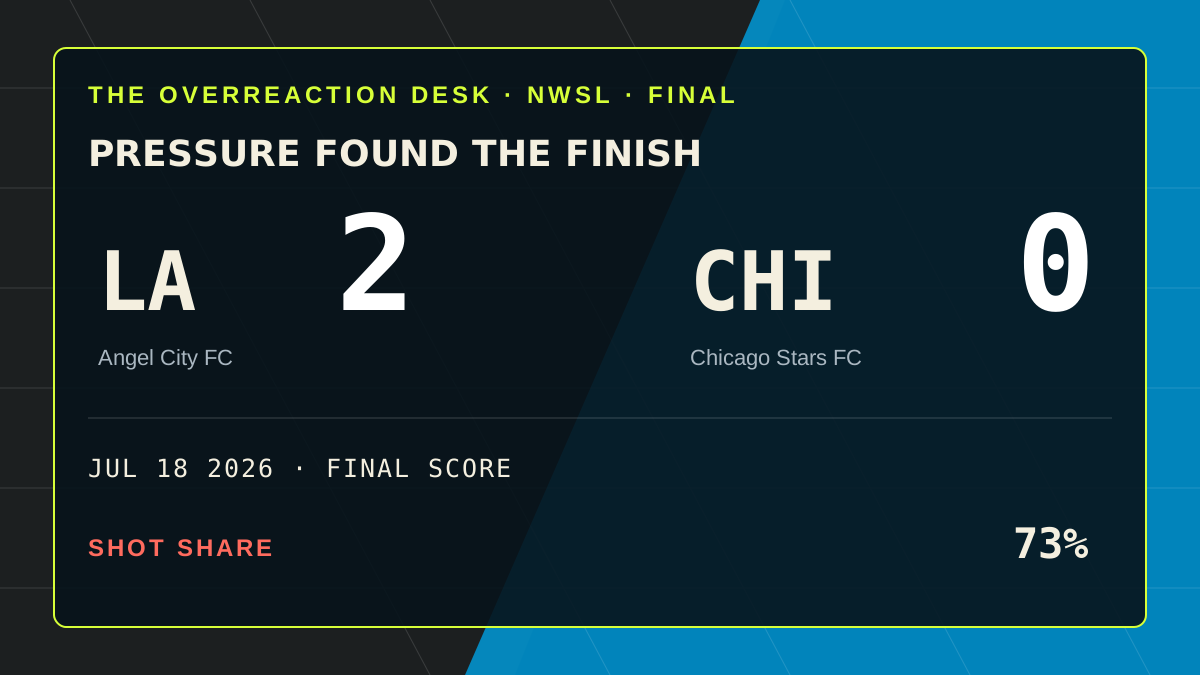
Angel City FC did not need a complicated explanation for its 2-0 win over Chicago Stars FC. It took 22 shots, put six on target and kept returning to the same problem until Chicago ran out of solutions.
The Stars held the match scoreless through halftime at Northwestern Medicine Field at Martin Stadium. That was useful resistance, but it was not control. Angel City had more of the ball, more corners and almost three times as many shots. Chicago was surviving the argument rather than winning it.
The final score arrived late. The shape of the match had been there much earlier.
Niehues Ended the Standoff
Maiara Niehues converted a penalty in the 56th minute, sending a right-footed shot into the bottom-left corner. After all the open-play pressure, the breakthrough came from the spot and changed Chicago’s job immediately.
The Stars could no longer protect a scoreless draw. They had to chase a match in which they had produced only eight total shots and three on target. That is a thin attacking budget when the other team keeps manufacturing new possessions near your goal.
Angel City did not turn the lead into a frantic exercise. It kept the territorial edge, forced Chicago to spend energy defending and waited for the second goal to match the larger performance.
Jonsdottir Supplied the Proportion
Sveindis Jonsdottir scored eight minutes into second-half stoppage time from Prisca Chilufya’s assist. The close-range finish made it 2-0 and gave the scoreboard the separation that the shot count had advertised all evening.
Chicago goalkeeper Alyssa Naeher made four saves. Angel City goalkeeper Angelina Anderson made three. Those numbers underline the basic difference: Chicago created occasional work, while Angel City created a continuing shift.
The Stars were competitive enough to keep the result within one goal until the final minutes. They were not dangerous enough to make Angel City regret failing to score earlier. A 0-0 halftime score offered Chicago a doorway. Eight shots never gave the Stars much reason to believe they could walk through it.
The Desk Metric: 73% of the Shots
Angel City took 22 of the match’s 30 shots, a 73% shot share. The visitors also led 6-3 in shots on target and 7-4 in corners.
The metric explains why the penalty was not a random escape hatch. Angel City had already built the larger attacking inventory. Niehues converted the moment that broke the tie, and Jonsdottir converted the moment that put the final score in proportion.
Chicago can point to a scoreless first half. Angel City can point to nearly three quarters of the shots and the only two goals. One of those collections travels much better.
The Official Overreaction
Desk ruling: Chicago delayed the result, but Angel City owned the pressure that produced it. Niehues broke the standoff, Jonsdottir finished the paperwork, and 22 shots made the 2-0 score feel less like a late turn than a long-overdue receipt.