The Exhibition, Allegedly
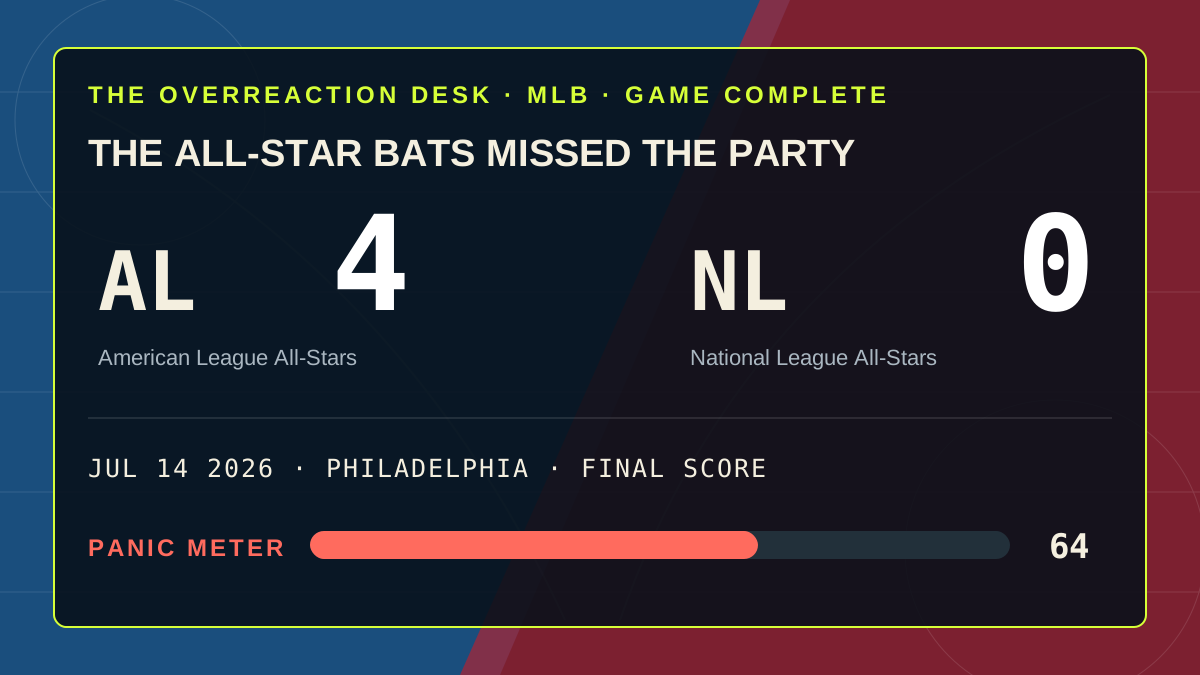
The American League beat the National League 4-0 in the 2026 MLB All-Star Game on Tuesday, and the score accurately captured the night’s central problem: one league brought an offense and the other brought an impressive collection of batting gloves.
The AL scored three runs in the first inning at Citizens Bank Park and never needed another rally. Its pitchers allowed only three hits, struck out 15, and did not permit an NL runner to reach second base. For an exhibition built to gather baseball’s most dangerous hitters in one place, the National League portion played like a very exclusive waiting room.
When the Game Was Already Over
The entire game tilted with two outs in the top of the first. Yordan Alvarez singled, Shea Langeliers and Bobby Witt Jr. walked, and Cody Bellinger lined a two-run single to center off Cristopher Sanchez. Ben Rice followed with another single to drive in Witt.
Three runs arrived before the NL had taken an at-bat. Against a normal pitching staff, that would have been an early problem. Against an All-Star relay that offered a new elite arm almost every inning, it became the full assignment. The National League never solved it.
Who Actually Took This Seriously
Bellinger’s two-run single supplied the decisive blow and earned him the All-Star Game MVP award. His Yankees teammate Rice added the third run of the first inning, giving the AL all the offense its pitchers required before much of the crowd had finished evaluating the opening matchups.
Miguel Vargas added a solo home run in the eighth, the game’s only extra-base hit. That pushed the lead to 4-0 and provided an unnecessary but aesthetically satisfying final layer of insurance.
The larger credit belongs to the 11 AL pitchers who combined on the shutout. Dylan Cease struck out the side in the first. The relievers maintained the same basic policy: allow almost nothing, change pitchers, repeat. Eleven arms, three hits, 15 strikeouts, and no runner reaching second base is not bullpen management. It is a rotating denial-of-service desk for hitters.
The All-Star Walk of Shame
The National League lineup gets the longest segment. Juan Soto, Pete Crow-Armstrong, and Otto Lopez accounted for the three hits, but none became a real scoring threat. A roster assembled from stars produced zero runs and no extra-base hits. There are regular-season teams that would receive a closed-door meeting for less.
Sanchez also absorbed a difficult hometown inning. The Phillies left-hander gave up all three first-inning runs in his own ballpark. One exhibition start does not change his season, but Philadelphia is a city that can turn an awkward inning into a weeklong public seminar before the final out reaches the catcher’s glove.
What We Are Pretending This Means
The AL earned its first All-Star win since 2024 and extended its all-time series lead to 49-45-2. It was the first shutout in the event since 2013 and the 10th shutout in All-Star Game history.
Those numbers do not affect the standings, but the performance still mattered as a showcase. The AL’s depth produced a complete pitching clinic, Bellinger converted the game’s biggest early opportunity, and the NL’s famous lineup provided a reminder that star power is not the same thing as runs already deposited.
The Desk Has Ruled
The American League used the first inning to establish the result and the next eight to place it under armed guard. The National League sent up star after star, each presumably confident that somebody with that many career highlights would eventually locate second base.
Nobody did.
Desk ruling: the AL won the game, the pitching staff won the night, and the NL offense has been asked to return its All-Star credentials to the front desk for routine inspection.